

CareerClarity360
Brand System
What's Your Right Next Thing?
Building the brand for the coach who asks everyone else with a 360 lens
Role: Creative Director, Brand Design, UX/UI | Kindle Point
Client: CareerClarity360 · Jeff Wuenker, Founder & Chief Career Advisor
Scope: Brand strategy · Identity & style guide · Color system · Website · 3D avatar library · Social, presentation & meeting templates · FAQ / AEO content architecture
The short version
Jeff Wuenker helps people find the right next thing. When it came time to launch his own independent coaching practice, he needed a brand that could do in five seconds what he does in five sessions: signal clarity, warmth and authority — in a category where everyone claims all three.
Kindle Point built the whole system. Identity, color, web, illustration, templates and a content architecture designed to be found by search engines and answer engines alike. One founder, one brand, no design department required.
The Challenge
I've hired Jeff as my coach. Twice. Both times I told him some version of the same thing: it's a little unfair how good you are at this for other people.
That's the joke we've been running ever since — and it's also the actual brief. Jeff had two decades of credibility, a methodology that works, and a referral network that trusted him personally. What he didn't have was a brand. His reputation lived in other people's heads, which is a wonderful place for it right up until you go independent and need it to live somewhere a stranger can find it.
Career coaching is a brutally crowded category. Search it and you get a wall of identical promises, identical blues, and identical photos of someone gazing thoughtfully out of a window. Jeff needed to look established on day one, sound unmistakably like himself, and give a prospect a reason to believe before the first call.
He needed his own right next thing.

The Solution
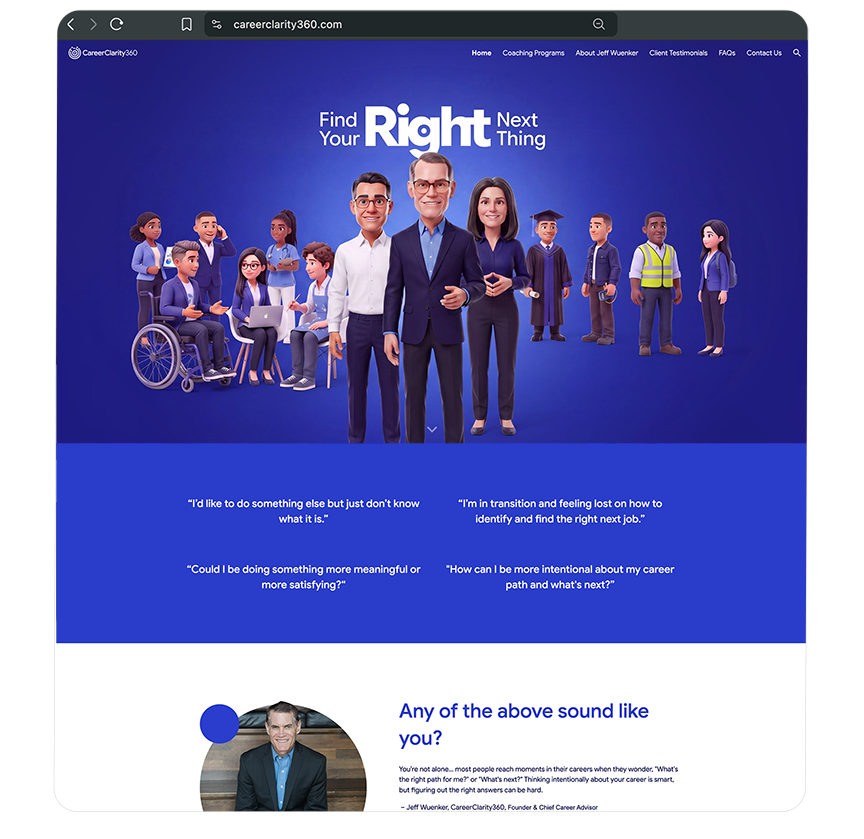
The line was already his
Nearly every competitor sells the destination focusing on the new title, the raise, the pivot. Almost nobody sells the decision that comes before it. Jeff was already standing there.
What's Your Right Next Thing?
His tagline, his preference, his strategy. He asked what I thought of it. I told him it was strong and that four words is about the limit of what a client carries out of a session and can still repeat a week later.
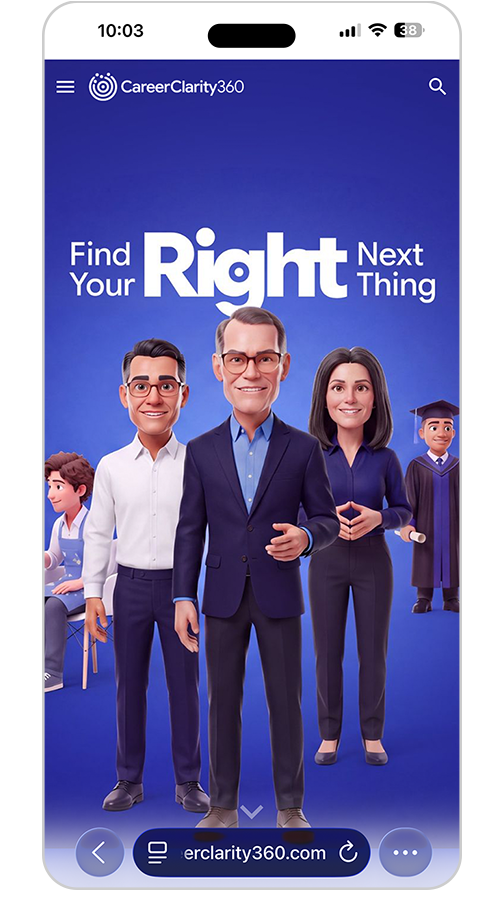
So the work wasn't finding the line. It was making it look like the thing it already was: display type treatment, top of the hierarchy above the supporting questions Jeff had heard from many clients before, and a homepage hero pairing it with AI-generated imagery so it lands as a statement rather than a caption.
"I'd like to do something else but just don't know what it is."
"I'm in transition and feeling lost on how to identify and find the right next job."
"Could I be doing something more meaningful or more satisfying?"
"How can I be more intentional about my career path and what's next?"
These homepage questions meet people where they are: Uncertain, mid-transition, a little embarrassed to say any of it out loud. The hero question tells them where they're going. Recognition first, then direction. It's the sequence Jeff runs in a session, now running in a scroll.
The positioning sits right behind it: most career struggles start with not knowing what "right" looks like. CareerClarity360 helps you define it, then pursue it with intention.
Kindle Point authored the four internal system values, brand assets had to support Choice. Collaborative. Calibration. Focused.
Key filters. If an asset couldn't pass all four, it didn't ship.
A mark that means 360 instead of just saying it
Most career coaching begins and ends with the résumé.
Jeff's doesn't. The 360 is literal; he reads the whole person. Not only what someone has done and is good at, but what they're drawn to, what they do on a Saturday, how they actually want to live. People leave one job for a marginally better one every day. Jeff is after the variables sitting underneath that decision.
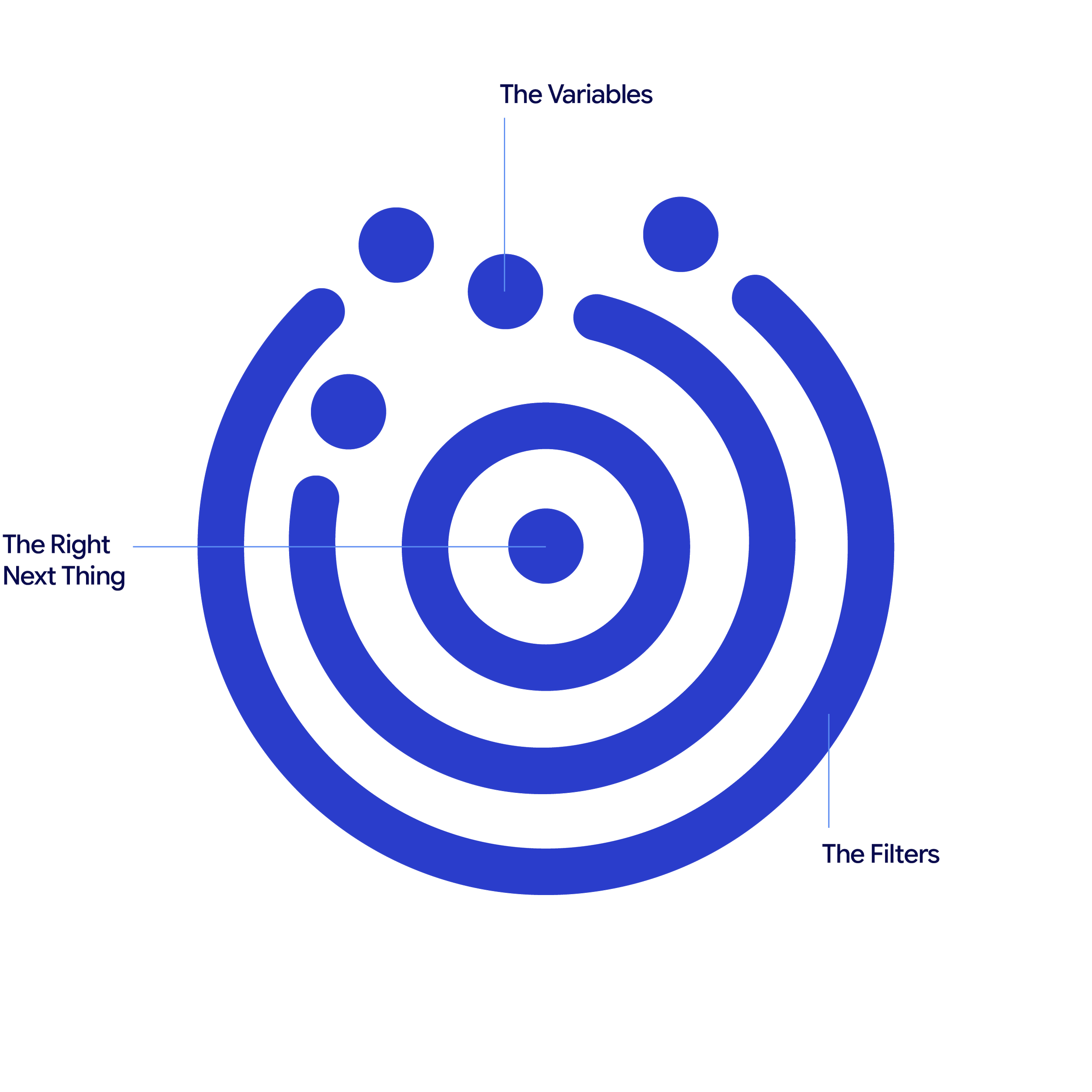
The mark diagrams the process rather than illustrating a category.
The center dot is the client's target — the right next thing. The dots surrounding it are everything that bears on it: the options, the passions, the hobbies, the lifestyle constraints, the trade-offs nobody puts on a résumé.

And the concentric rings function as filter controls — dials that get turned, narrowed and re-set as the work progresses. Because clarity is rarely a lightning strike. It's adjustment, until the picture resolves.
The rings carry a second reading too: figures arranged around a shared center, which is roughly what a coaching engagement looks like from above. At a glance the whole thing still lands as a target and a location signal, so the 360 stops being a number in the name and becomes a picture of the method.
The form language then carries through every asset: layered, intersecting arcs and circles. The semiotics do real work. Intersection reads as connection. The circle reads as whole-person. Curves are simply more welcoming than the hard rules and chevrons the category defaults to. Warm without being soft. Professional without being cold.

Blue, on purpose and then earned
Blue was in Jeff's original brief, and blue is table stakes in this category. It signals trust and authority, clients unconsciously expect it, and fighting that expectation costs credibility a new practice can't spare.

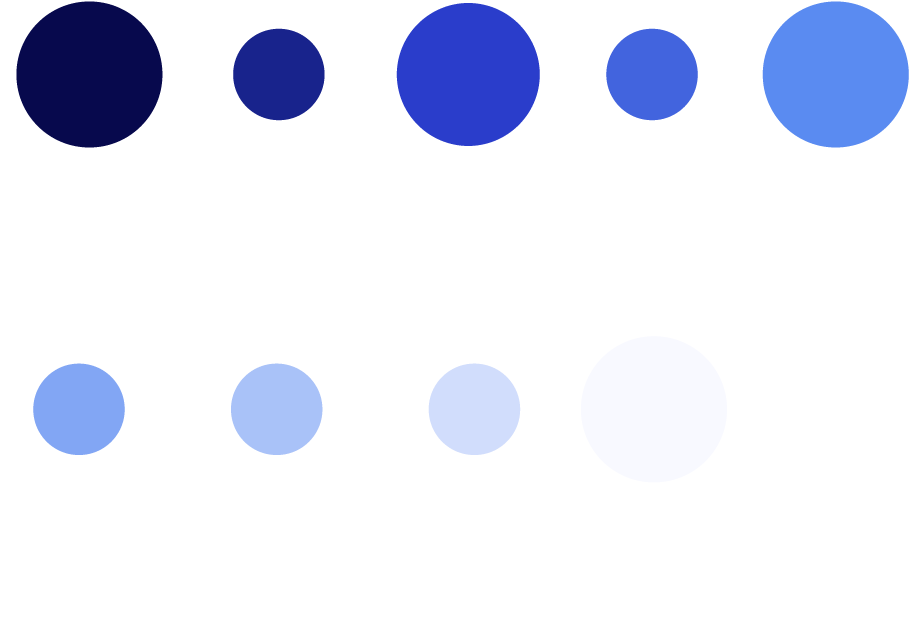
So the strategy was never to escape blue. It was to be the most deliberate blue in the room. The palette is a ten-step monochromatic ladder from Dark #07094d to white with a primary hue of #2a3dcb to get vibrant and closer to a technology brand than the dusty, dated navy most coaching sites settle for. That single decision does a lot of quiet work: it reads current rather than institutional, it gives a solo founder a complete tonal system instead of a handful of swatches, and because the ladder was built for contrast, every combination clears accessibility standards without a second thought.
An avatar cast
Not a founder headshot

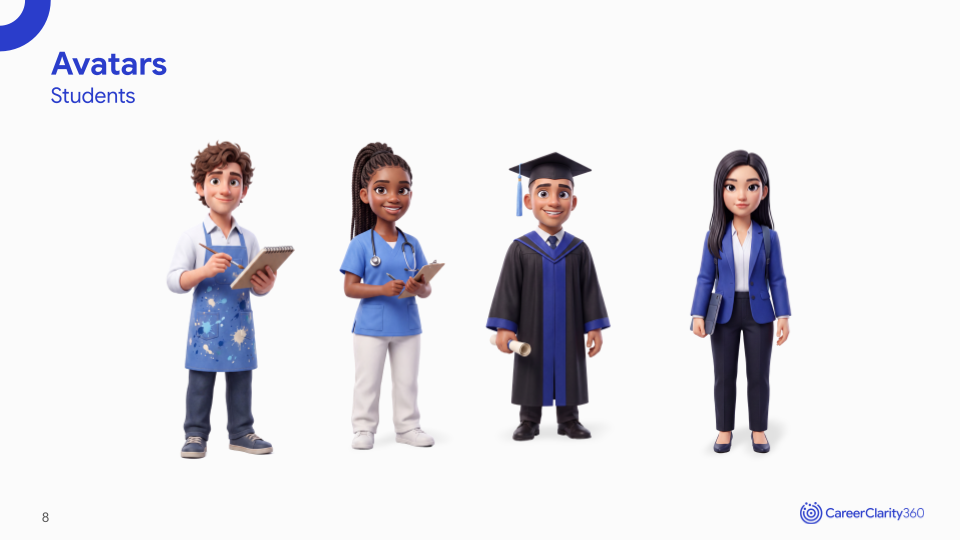
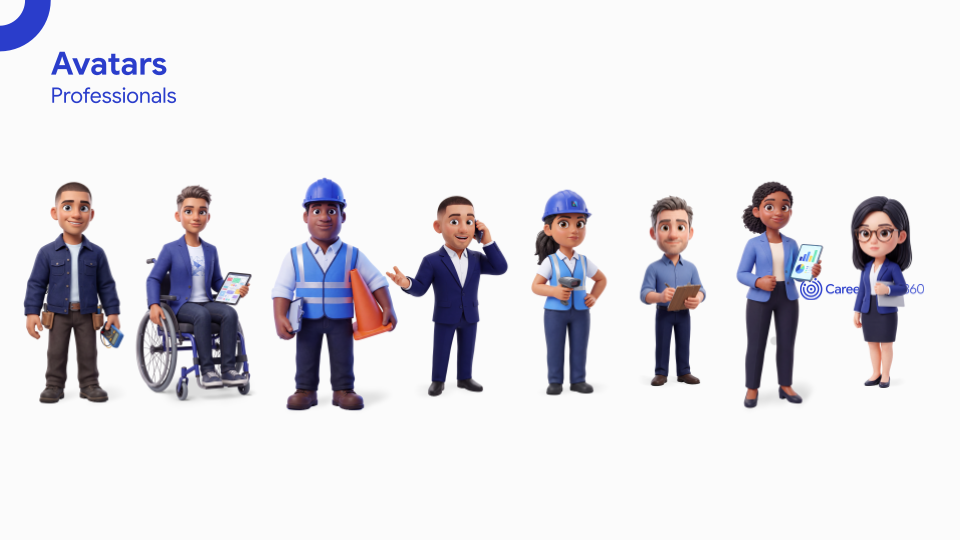
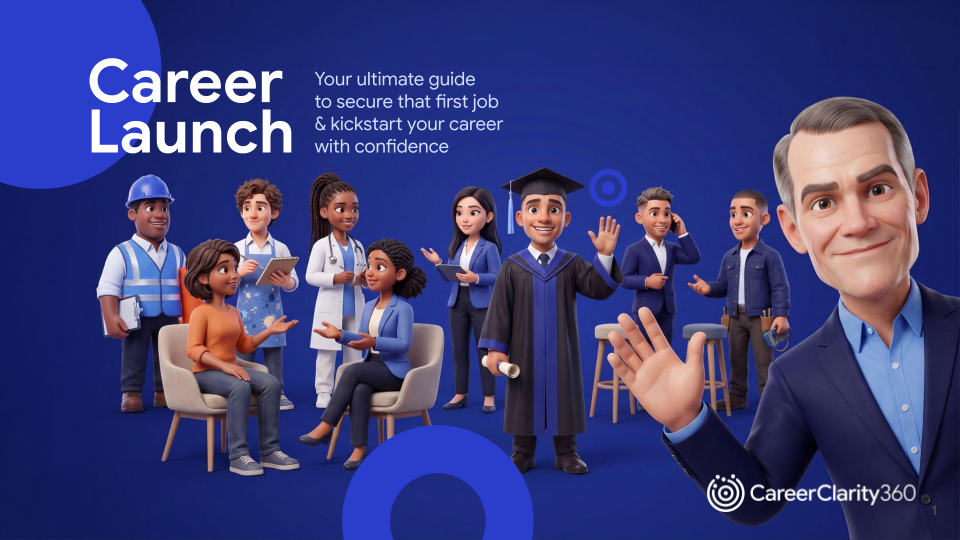
We built an approachable library of 3D avatars
Jeff, alongside students, mid-career professionals and specialists from across disciplines.
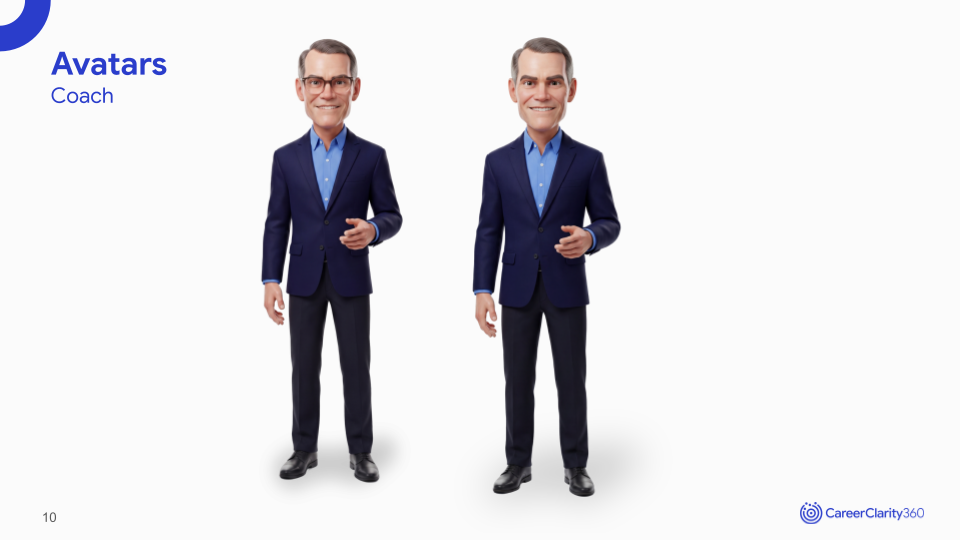
Strategic, not decorative. Facilitating connection is one of Jeff's sharpest talents, and no single founder portrait can communicate that. The avatar cast lets every touchpoint show the room he builds for clients instead of describing it — different people, different disciplines, visibly in conversation. It solved a practical problem too: a brand-new practice with no client photography now has an infinitely extensible, always-on-brand image system.
A system one person can actually run


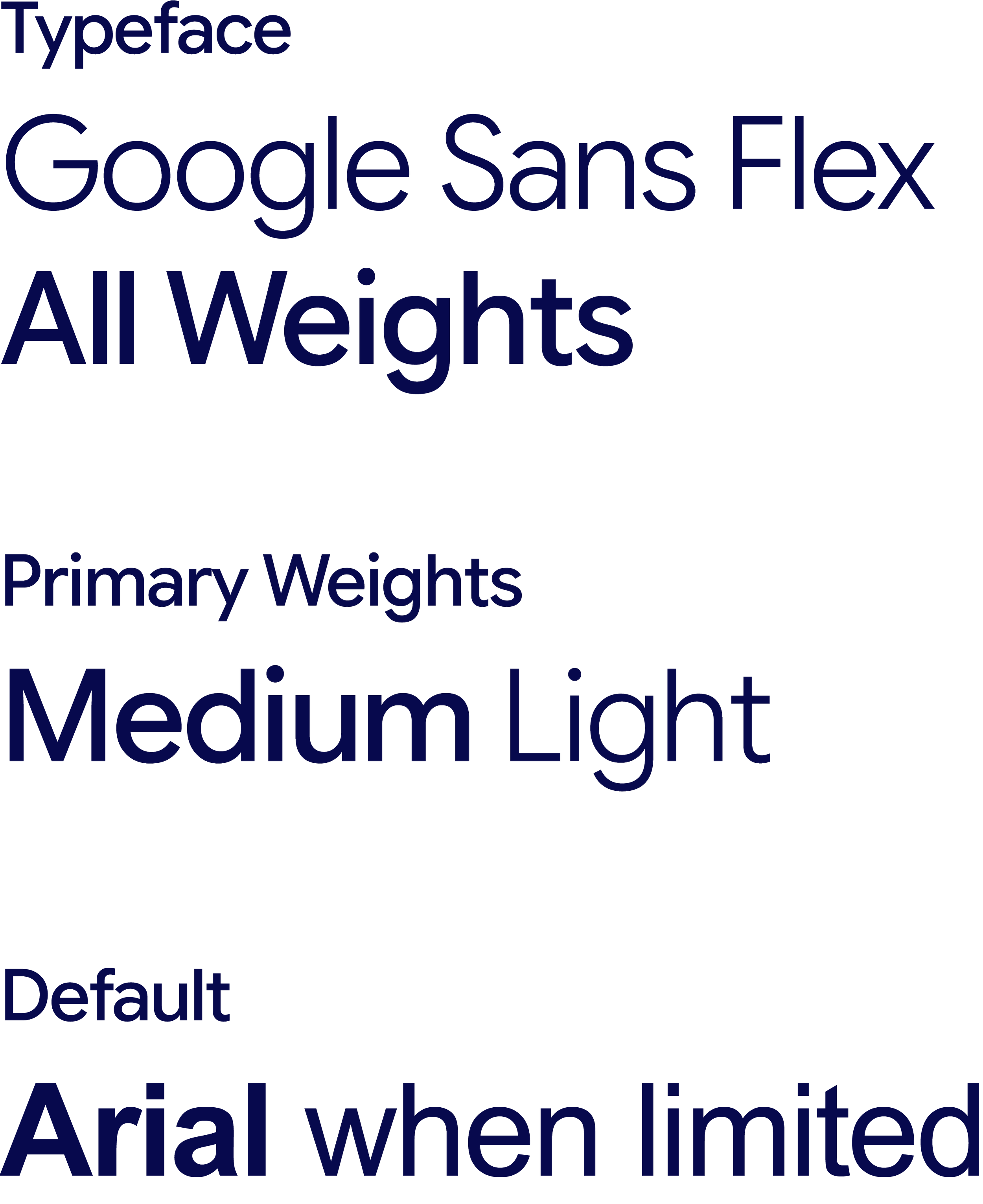
The typeface is Google Sans Flex — Medium and Light as primary weights, with Arial documented as the fallback when the brand travels somewhere it can't follow. That choice cascades: the site, the decks, the documents and the meeting backgrounds all live in tools Jeff already opens every morning.
That's the unglamorous half of a good identity. A brand a solo founder can't operate is a brand that decays by month three. This one ships with social templates, presentation templates, a branded Google Meet background and even embroidered coach caps (see below) so every surface, from a LinkedIn post to a video call to a conference hallway, is already handled.
How do you get found by AI assistants?
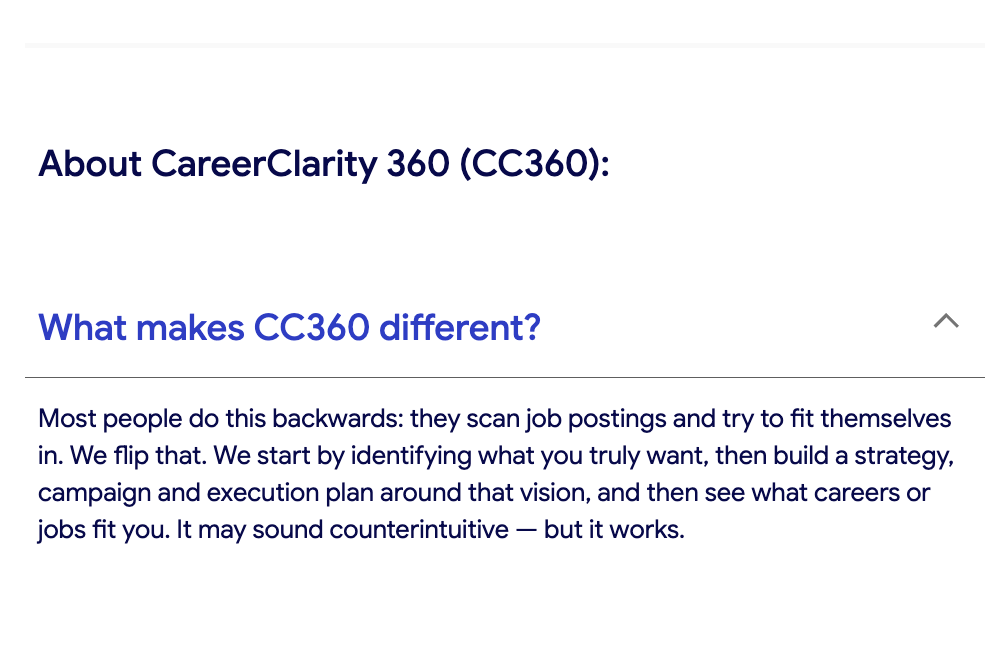
Built to be found, and to be answered
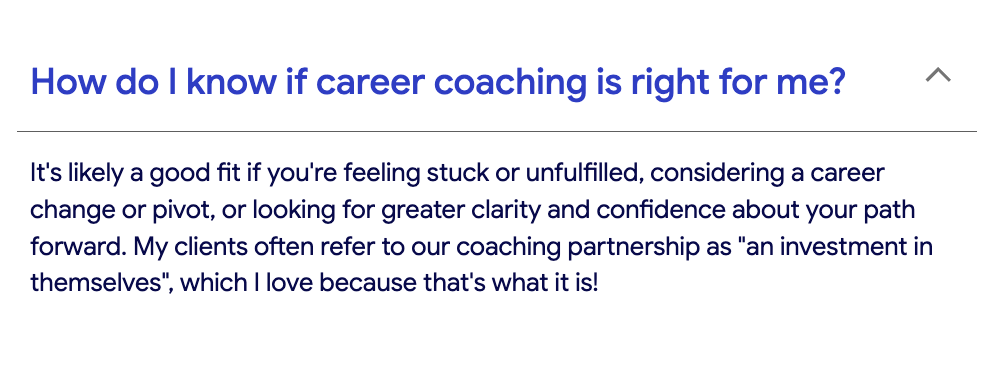
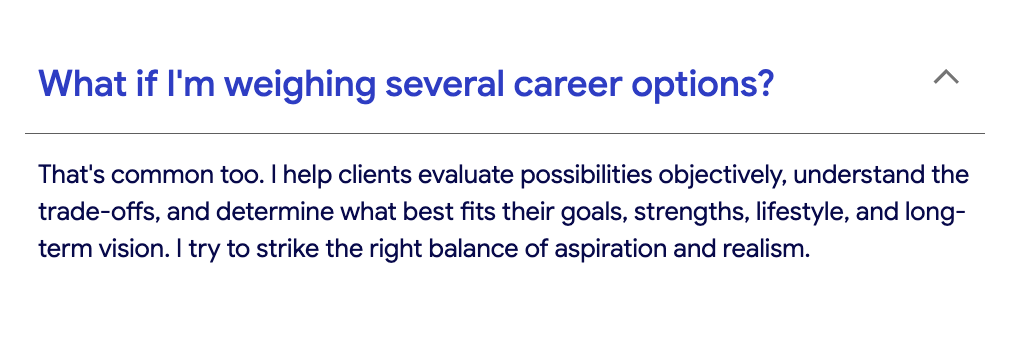
Here's the part that made the question hierarchy pay off twice: those supporting questions are also, almost verbatim, how people search.
Nobody types "holistic career coaching methodology" into anything. They type "I don't know what I want to do next." So the content architecture was built on that language — a structured FAQ layer that makes the practice legible to answer engines and AI assistants, not just traditional search. When someone asks an assistant how to figure out their next career move, Jeff's methodology is retrievable, attributable and quotable.
Same sentences, three jobs: they make a stranger feel understood, they organize the site, and they get the brand surfaced by a machine.
The brand launched in May 2026, and it paid for itself inside a quarter. Jeff's client base more than doubled in the two months following launch.
Just as telling: it grew through the front door. Prospects arrived already understanding what he does and how he does it, which meant the first conversation could start at the work instead of the explanation.
The Results
“Kevin’s impact extended far beyond branding. Throughout the process, he shared invaluable business-building insights, strategic ideas, and practical recommendations drawn from his extensive experience. His expertise in AI has also been a tremendous asset — he knows not only what’s possible, but how to leverage AI to improve both efficiency and effectiveness in meaningful ways.”
Jeff credits the alignment directly: the brand development tracked closely to his real methods, expertise and values. The promise the brand makes is the one the engagement keeps.
“Rather than simply creating a logo or visual identity, Kevin worked with me to understand what I wanted my business to communicate and helped bring to life a brand that truly reflects who I am and what I offer.”
“I cannot recommend Kevin Gilsdorf highly enough as both a brand builder and business strategist. I genuinely don’t believe I would have come this far this quickly without Kevin and his strategic branding studio Kindle Point. If you’re looking for someone who can help you build not only a compelling brand but also a stronger business, Kevin is the person you want in your corner.”


Jeff spends his days helping people figure out what's next. Turns out that's a harder trick to perform on yourself. Which is more or less why coaches exist, and more or less why brand studios do too.
I'd tell him that again, but he's heard it twice already.